Restaurant Business Success Series | Blog #6
Lessons from Nearly 20 Years of Opening and Operating Restaurants in Greater Vancouver
The Best Choice Depends on Your Customers, Location, and Business Model — Not Just the Brand Name
Finding the right restaurant opportunity is only the beginning.
After choosing a good location or an existing restaurant business, every entrepreneur faces an important decision:
Should I build my own restaurant brand, or should I join a franchise?
After nearly 20 years in the restaurant industry in Canada, I have learned that there is no single answer.
Both independent restaurants and franchises can succeed. Both can also fail.
The most important factor is not the popularity of the brand.
The success of a restaurant depends on understanding your customers, choosing the right location, and selecting the right business model.
Understanding the Real Cost of a Franchise
Many first-time restaurant owners believe that buying a well-known franchise is automatically safer.
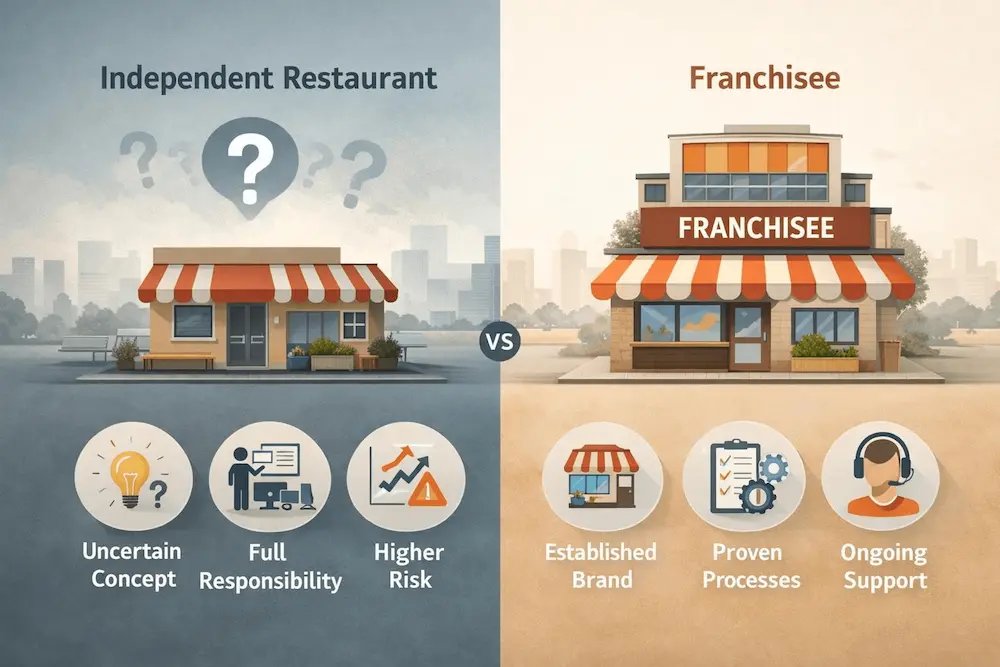
A franchise can provide many advantages:
- Brand recognition
- Standardized operating systems
- Training and support
- Established marketing strategies
However, before choosing a franchise, entrepreneurs must carefully analyze the financial structure.
A franchise usually requires:
- Initial franchise fees
- Ongoing royalty payments
- Marketing fees
- Required supplier purchases
- Technology and system fees
- Renovation requirements
These costs continue even when sales are lower than expected.
The most important question is:
After paying all franchise-related costs, can this business still generate a healthy profit?
A famous brand does not always mean a profitable business.
Location and Customer Type Often Determine the Best Choice
One of the biggest mistakes new entrepreneurs make is choosing a brand before understanding the location.
The right question is not:
“Which brand is famous?”
The right question is:
“What do customers in this location want?”
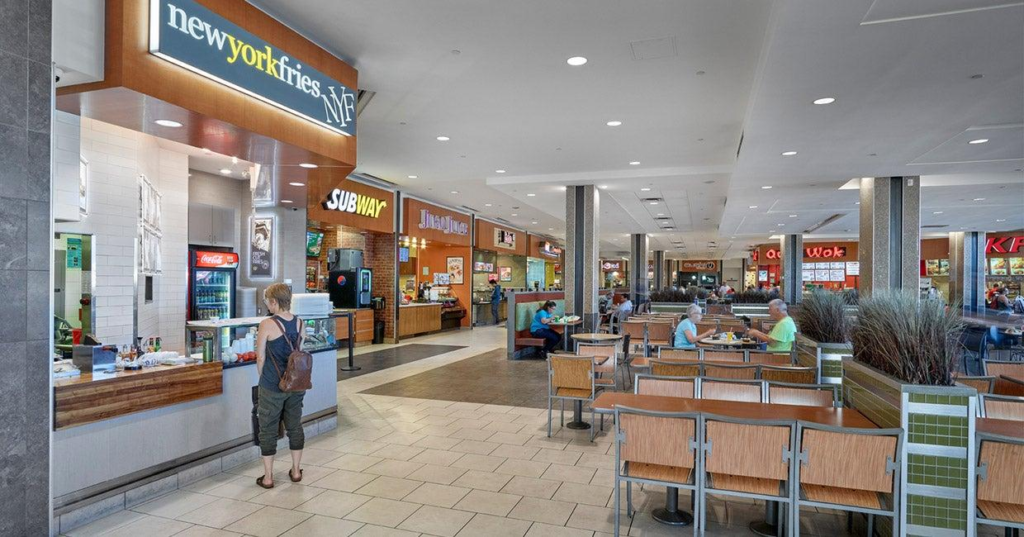
For example, franchises often have a strong advantage in:
- Downtown business districts
- Shopping malls
- Food courts
- Tourist areas
- High-traffic locations
In these areas, many customers are not regular customers. They are first-time visitors.
When people are unfamiliar with the restaurants around them, they often choose a brand they already recognize.
For a first-time restaurant owner, a good franchise can reduce some of the risks of building a new brand from zero.
Never Judge a Franchise Only by the Head Office
This is one of the most important lessons I have learned.
Many franchise companies present successful examples through their best-performing locations or recommended franchise stores.
Those examples may be real, but they do not always represent the average franchise owner.
Before investing, you should research the actual experience of existing franchisees.
Ask questions such as:
- Are franchise owners making a reasonable profit after all fees?
- Are they satisfied with the support from the franchisor?
- Would they invest in the same franchise again?
- Are franchise locations growing or closing?
Do not only visit the stores recommended by the franchise company.
Talk directly with different franchise owners.
The true value of a franchise is not measured by the head office’s marketing materials.
It is measured by the financial success and satisfaction of the franchise owners.
A good franchisor grows together with its franchisees.
Avoid Temporary Trends — Choose a Steady Menu
The restaurant industry is full of trends.
A new food or beverage concept can suddenly become extremely popular. Many entrepreneurs rush into these opportunities because they see long lines and fast growth.
However, popularity does not always last.
Over the years, I have watched several restaurant concepts become incredibly popular almost overnight. Long lines formed outside their stores, and many entrepreneurs rushed to invest, believing the success would continue.
Yet after the trend faded, many of those businesses disappeared.
That experience taught me an important lesson:
A temporary trend may bring customers today, but a steady menu builds a business for years.
Before investing in any concept, ask:
- Will customers still want this product five years from now?
- Does it fit the local market?
- Can it survive after the excitement disappears?
A restaurant built around steady customer demand has a much stronger foundation than one built only on temporary popularity.
When an Independent Restaurant Can Be the Better Choice
Franchises are not always the best option.
In many residential areas and local communities, independent restaurants can have a significant advantage.
Local customers often care more about:
- Food quality
- Consistency
- Service
- Personal connection
Throughout my years in the restaurant industry, I have also seen many independent restaurants quietly outperform well-known franchise brands.
They did not have large marketing budgets or famous names.
What they had was a deep understanding of their customers.
They knew what local people wanted, provided consistent quality, and built loyal relationships.
In my experience:
Restaurants that truly understand their customers often achieve more sustainable success than businesses that rely only on brand recognition.
My Final Thoughts
Many entrepreneurs ask:
“Should I choose a franchise or create my own restaurant brand?”
My answer is:
Do not start with the brand.
Start with the customer.
Understand:
- Who your customers are
- What they want
- Why they would choose your restaurant
- Whether your location supports your concept
If you choose a franchise, carefully study the franchise owners, not just the franchisor.
If you create your own brand, focus on building loyal customers, not chasing temporary trends.
At the end of the day, restaurants succeed because they serve customers better than their competitors.
The brand may attract customers once, but only customer satisfaction brings them back.
About the Author
The author has spent nearly 20 years opening and operating independent restaurants in Greater Vancouver, Canada. Rather than sharing theory, this blog series is based on real-world experience—successful openings, costly mistakes, operational improvements, and practical systems that help small restaurants achieve long-term success. My goal is to help future restaurant owners avoid costly mistakes and make better decisions before investing their time, money, and energy.
Beyond Canada
Although the examples in this article come from my experience opening and operating restaurants in Greater Vancouver, the principles themselves are not limited to Canada.
- Understanding your customers.
- Choosing the right location.
- Making decisions based on research instead of emotion.
- Preparing for unexpected costs.
- These principles apply to restaurant businesses almost anywhere in the world.
- Markets may differ.
- Cultures may differ.
- Customers may differ.
- But successful restaurants are still built on the same fundamentals.
Internal Links
You can naturally connect this article to the following posts: