Restaurant Business Success Series | Blog #16
How Standardized Systems Create Consistent Food Quality, Loyal Customers, and Long-Term Restaurant Success
Introduction
(Standardized Restaurant Kitchen Systems)
One lesson has become clearer to me after nearly twenty years of opening and operating restaurants in Greater Vancouver:
A restaurant should never depend on one person. It should depend on a system.
Many restaurant owners believe that hiring an excellent chef is the key to success. A talented chef can certainly create outstanding food, but relying on one person’s skills creates a hidden risk that often becomes visible only after years of operation.
Sooner or later, every restaurant experiences change. A head chef may take a vacation, become ill, retire, accept another opportunity, or simply decide to move on. When that happens, restaurants built around one individual often struggle to maintain the same quality and consistency that customers expect.
A successful restaurant is not one that performs well only when its best chef is working.
It is one that delivers the same experience every day, regardless of who is in the kitchen.
Why Customers Trust Franchise Restaurants
In previous articles, I explained why global restaurant brands such as McDonald’s and Starbucks have earned the trust of customers around the world.
Whether you visit one in Vancouver, Seoul, Tokyo, London, or New York, customers expect nearly the same food quality, presentation, and service.
That consistency is not the result of having the world’s best chef in every location.
It is the result of carefully designed operating systems.
Every recipe has been standardized.
Every preparation process follows the same procedure.
Cooking methods are documented.
Storage systems are organized.
Plating standards are clearly defined.
Cleaning routines are checked every day.
Because the system is standardized, different employees can consistently produce the same customer experience.
That consistency builds confidence.
Confidence builds trust.
And trust creates loyal customers.
Small Restaurants Need Systems Even More
Many independent restaurant owners believe systems are only necessary for large franchise businesses.
I believe the opposite.
Small restaurants need systems even more because they usually have fewer employees and fewer resources to recover from mistakes.
Unfortunately, many small restaurants depend almost entirely on the owner or the head chef.
Customers often recognize this without saying it.
As I mentioned in a previous blog, I once visited a restaurant that was well known for its excellent food.
Unfortunately, the owner-chef happened to be off that day.
The meal looked similar, but the flavor, consistency, and overall quality were noticeably different.
The experience was disappointing.
After that visit, whenever I wanted to return to that restaurant, I found myself checking whether the owner-chef would be working that day.
Think about what that means.
Customers should never have to plan their visit around one particular employee.
They should feel confident that every visit will provide the same quality, regardless of who is preparing the food.
If customers only trust your restaurant when one specific person is in the kitchen, your restaurant is depending on an individual instead of a system.
The Biggest Obstacle to Building Restaurant Systems
One of the greatest obstacles to standardization is not a lack of knowledge.
It is the belief that recipes should remain secret.
Many owners and head chefs intentionally keep certain ingredients, seasoning ratios, or cooking techniques to themselves because they believe those secrets protect their business.
At first, this may seem reasonable.
However, in reality, it often creates the biggest weakness in the entire operation.
Knowledge that exists only in one person’s mind is not a business asset.
It is a business risk.
A restaurant becomes stronger when its knowledge is documented, standardized, continuously improved, and shared with the entire team.
The goal is not to make one chef indispensable.
The goal is to build a restaurant that consistently delivers outstanding food, even when that chef is not there.
That is the true beginning of a restaurant system.
The Six Systems Every Restaurant Should Standardize
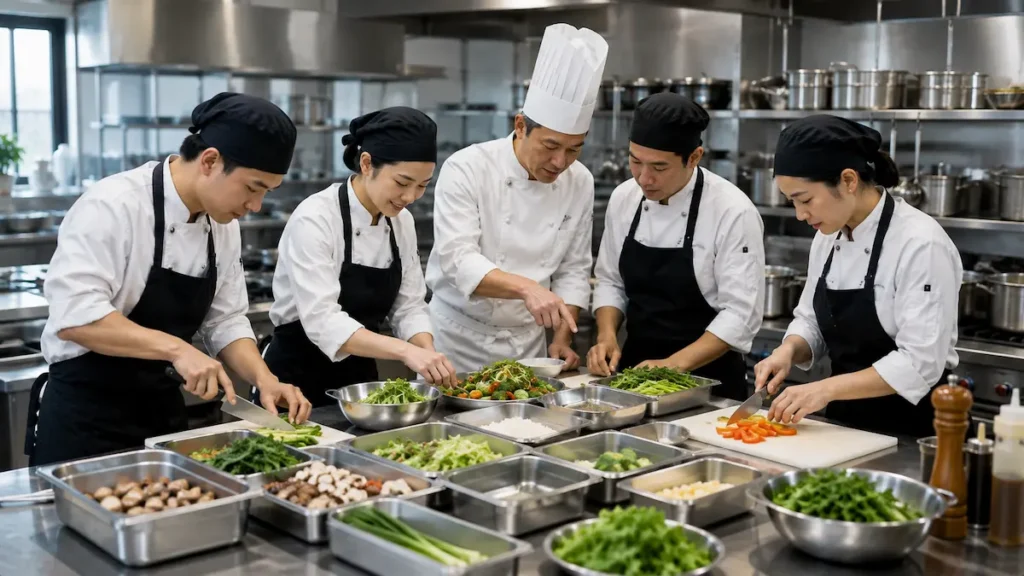
Building a successful restaurant is not about finding one exceptional chef. It is about creating systems that allow every trained employee to produce the same quality and customer experience.
Every restaurant should establish the following six systems.
1. Standard Recipe System
Every menu item should have a written standard recipe that includes exact ingredients, measurements, cooking methods, temperatures, and portion sizes.
A recipe should never exist only in the owner’s or head chef’s memory.
When recipes are documented and consistently followed, food quality remains stable, food costs become easier to control, and training new employees becomes much more efficient.
2. Prep System
Preparation should never depend on memory or individual habits.
Each ingredient should have standardized preparation procedures, including quantities, cutting methods, storage containers, labels, and preparation schedules.
A well-designed prep system allows the kitchen to operate efficiently, even during the busiest service hours.
3. Cooking System
Every cook should follow the same cooking procedures.
Cooking temperatures, cooking times, seasoning amounts, and quality standards should all be documented and practiced.
Whether a dish is prepared by the owner, the head chef, or a newly trained employee, customers should enjoy the same taste and quality every time.
4. Storage System
An organized storage system protects both food quality and profitability.
Every ingredient should have a designated storage location, clear labels, date markings, and FIFO (First In, First Out) rotation.
Most importantly, responsibility should be assigned to specific team members so the system is maintained consistently every day.
5. Plating System
Customers eat with their eyes before they take the first bite.
Every menu item should have standardized presentation guidelines, including reference photos, portion sizes, garnish placement, and serving procedures.
Consistent presentation strengthens your restaurant’s brand and reinforces customer confidence.
6. Cleaning System and Daily Checklists
Cleanliness should never depend on someone’s memory.
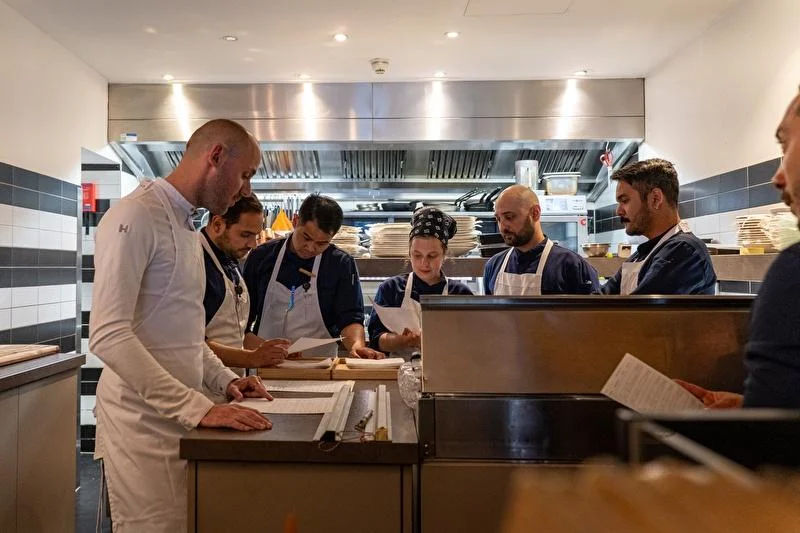
Daily, weekly, and monthly cleaning schedules should be documented with simple checklists that assign clear responsibilities.
A clean and organized kitchen improves food safety, increases efficiency, and creates a better working environment for everyone.
What I Learned After Nearly Twenty Years
When I first entered the restaurant business, I believed that maintaining great food required my constant presence in the kitchen.
Over time, I realized that this mindset limited the growth of the business.
A restaurant that cannot operate successfully without its owner is not yet a complete business.
The turning point came when we stopped relying on individual skills and started building systems.
- We documented our recipes.
- We standardized our preparation procedures.
- We organized our storage systems.
- We simplified and documented our cooking methods.
- We created plating standards.
- We introduced cleaning schedules and daily checklists.
The results were remarkable.
Training became easier.
Mistakes became less frequent.
Food quality became more consistent.
Most importantly, our customers became confident that they would receive the same dining experience every time they visited.
That consistency—not luck—is what builds a restaurant that lasts.
Restaurant System Checklist
Ask yourself these questions.
Is your restaurant built on people, or is it built on systems?
✅ Every menu item has a written standard recipe.
✅ Prep procedures are documented and consistently followed.
✅ Storage locations, labels, and FIFO rotation are standardized.
✅ Cooking temperatures and procedures are clearly defined.
✅ Every dish follows the same plating standard.
✅ Cleaning responsibilities are managed with daily, weekly, and monthly checklists.
✅ Well-trained employees can consistently produce the same quality without depending on the owner or head chef.
If you cannot confidently check every box, your restaurant still depends more on individuals than on systems.
Every improvement you make today builds a stronger restaurant for tomorrow.
Final Thoughts
Many restaurant owners believe their greatest asset is an outstanding chef.
I believe their greatest asset is an outstanding system.
Talented people are invaluable.
But people change.
They take vacations, retire, move on, or choose different paths.
Systems remain.
When knowledge is shared instead of hidden, documented instead of remembered, and continuously improved instead of protected as a personal secret, a restaurant becomes stronger with every new employee who joins the team.
That is how a small independent restaurant becomes a trusted local favorite.
That is how it delivers consistent quality year after year.
And that is how it achieves long-term success.
A talented chef can create a great dish. A great system creates a great restaurant that customers trust, return to, and remember for years to come.
About the Author
The author has spent nearly 20 years opening and operating independent restaurants in Greater Vancouver, Canada. Rather than sharing theory, this blog series is based on real-world experience—successful openings, costly mistakes, operational improvements, and practical systems that help small restaurants achieve long-term success.
Continue Reading
- Blog #11: How to Hire the Right Restaurant Employees: Hire for Character, Train for Skill
- Blog #12: How to Retain Great Restaurant Employees: Why Hiring Is Only the First Step
- Blog #13: How to Reduce Restaurant Food Costs Without Sacrificing Quality: Why Better Food Beats Cheaper Ingredients
- Blog #14: How to Manage Restaurant Inventory: The Secret to Lower Food Costs and Increase Profits
- Blog #15: Standard Recipes: The Secret to Consistent Taste, Lower Food Costs, and Loyal Restaurant Customers
- Blog #17: Increasing Kitchen Productivity Without Sacrificing Food Quality