Restaurant Business Success Series | Blog #14
Introduction
(How to Manage Restaurant Inventory)
In my previous article, I explained that reducing food cost is one of the most effective ways to improve restaurant profitability.
However, after nearly 20 years of opening and operating restaurants in Greater Vancouver, I have learned that food cost is not controlled in the kitchen alone—it begins with inventory management.
In the previous article, we discussed how controlling food cost improves profitability. This article takes the next step by explaining why effective inventory management is the foundation of controlling those costs.
Many restaurant owners spend considerable time negotiating lower prices with suppliers or adjusting menu prices. While those strategies certainly have value, they often overlook the daily decisions that have an even greater impact on profitability.
Every purchase you make, every item you store, and every ingredient you throw away directly affects your bottom line.
Good inventory management is much more than counting products on a shelf. It is about purchasing wisely, storing ingredients properly, minimizing waste, maintaining the right stock levels, and ensuring that customers can always order the dishes they came to enjoy.
In my experience, restaurants with strong inventory management usually maintain healthier food costs, smoother daily operations, and more consistent long-term profits.
Inventory Management Includes More Than Food
When people hear the word inventory, they usually think about expensive ingredients such as beef, seafood, or chicken.
In reality, inventory management includes every item your restaurant purchases.
This includes:
- Primary ingredients such as meat, seafood, vegetables, and rice
- Secondary ingredients such as sauces, spices, oils, and seasonings
- Beverages
- Disposable containers and packaging supplies
- Napkins, cups, utensils, and take-out materials
- Cleaning supplies and kitchen consumables
Each item may seem inexpensive by itself, but together they represent a significant portion of your operating expenses.
Small amounts of waste repeated every day eventually become thousands of dollars over the course of a year.
Successful restaurant owners understand that every dollar saved through proper inventory management contributes directly to restaurant profitability.
Inventory Is Cash Sitting on Your Shelves
One lesson I learned early in my restaurant career completely changed the way I viewed inventory.
Every item sitting in a refrigerator, freezer, or storage room represents money that has already left your bank account.
Until that ingredient is sold to a customer, it generates no return.
If products expire before they are used, that cash is gone forever.
Good inventory management is not only about reducing food waste.
It is also about protecting your cash flow.
Restaurants with healthy cash flow are better prepared for unexpected repairs, seasonal slowdowns, rising food prices, and other business challenges.
That is why experienced restaurant owners do not simply see inventory as products.
They see inventory as cash that must be carefully managed.
Buy Smart During Supplier Promotions
One of the easiest ways to lower food costs is taking advantage of supplier promotions and seasonal discounts.
When important ingredients are offered at reduced prices, purchasing larger quantities can lower your average cost per serving.
However, there is one important rule.
Only buy what you can properly manage.
Before placing a larger order, always consider:
- Your average weekly sales
- Average ingredient usage
- Available refrigerator and freezer space
- Proper storage conditions
- Product expiration dates
Buying products at a discounted price only creates savings if they are used before they expire.
Otherwise, the discount disappears the moment expired ingredients are thrown away.
One lesson I have learned over the years is simple:
The cheapest ingredient is the one that never ends up in the garbage.
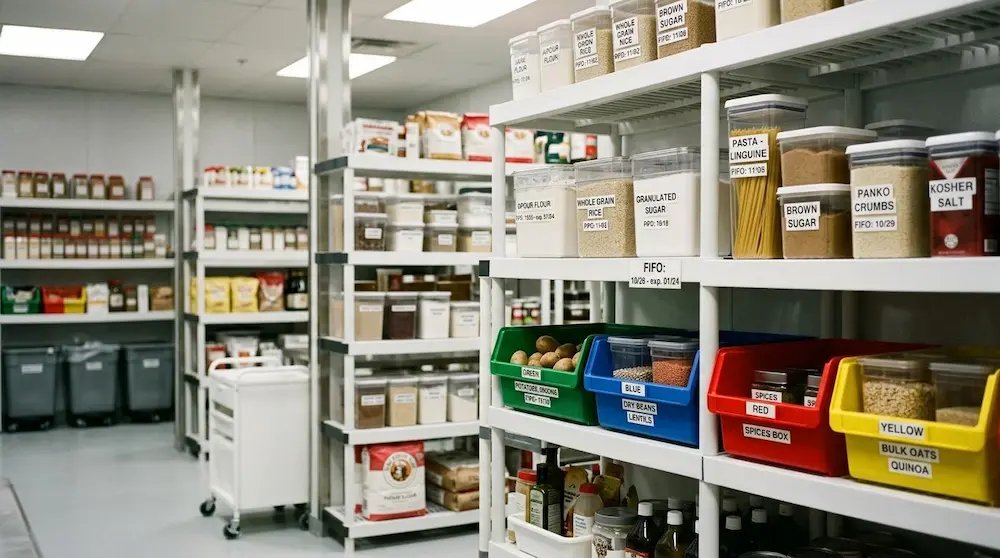
The Hidden Cost of Overstocking
Many first-time restaurant owners believe that having extra inventory provides security.
In reality, excessive inventory often creates unnecessary costs.
Too much inventory can lead to:
- Expired ingredients
- Reduced freshness and food quality
- Increased food waste
- Limited storage space
- Cash tied up in unused inventory
Money sitting on storage shelves cannot be invested elsewhere in your business.
Instead of creating security, excessive inventory quietly increases food costs without many owners realizing it.
Good inventory management keeps products moving instead of sitting.
Fresh inventory is almost always more profitable than excessive inventory.
The Bigger Risk: Running Out of Stock
While excessive inventory increases costs, insufficient inventory can be even more damaging.
Imagine a customer visiting your restaurant specifically to order your most popular menu item.
After waiting to be seated, they hear one disappointing sentence:
“I’m sorry, we’re sold out today.”
Some customers may choose another menu item.
Others may simply leave.
Either way, the restaurant loses something valuable.
Running out of key ingredients does more than reduce one day’s sales.
It can:
- Lower customer satisfaction
- Damage your restaurant’s reputation
- Reduce repeat business
- Encourage customers to visit competitors
The money saved by ordering less inventory is often far smaller than the revenue lost when customers cannot order the dishes they came for.
That is why successful inventory management is not about carrying the smallest possible inventory.
It is about maintaining the right inventory.
Finding the right balance between overstocking and understocking is one of the most valuable management skills a restaurant owner can develop.
Build an Inventory System, Not Just a Storage Room
One of the biggest mistakes I see in small restaurants is relying on memory instead of a system.
When business becomes busy, no owner can accurately remember every ingredient, every expiration date, or every item that needs to be reordered.
Successful restaurants build systems instead of depending on memory.
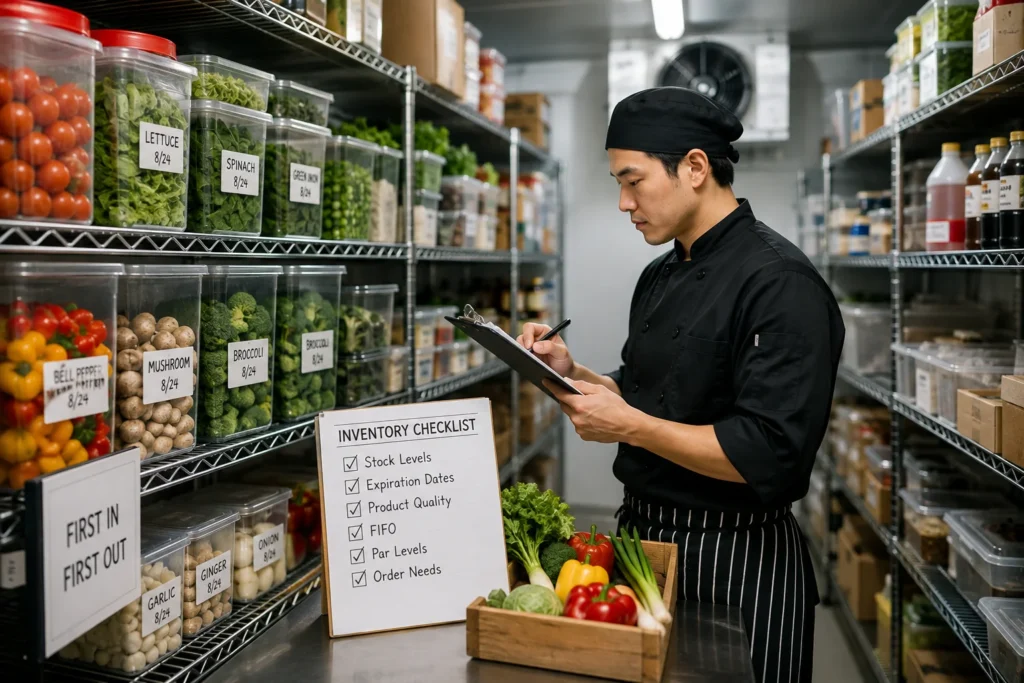
Every restaurant should have:
- A standardized inventory checklist
- A designated employee responsible for inventory
- Weekly or bi-weekly inventory counts
- First-In, First-Out (FIFO) stock rotation
- Purchase records and inventory usage reports
Even the best inventory system will fail without accountability.
Assigning one person to oversee inventory and following a consistent schedule creates responsibility, reduces mistakes, and makes inventory management part of the restaurant’s daily culture rather than an occasional task.
A simple system that is followed consistently is far more valuable than a complicated system that nobody uses.
Success Story: Buying Smart Reduced Our Food Cost
One experience clearly demonstrated how proper inventory management can improve profitability.
One of our major suppliers offered an attractive promotion on one of our frequently used ingredients. Instead of purchasing the largest quantity possible, we first reviewed our average weekly usage, available storage space, and the product’s expiration date.
Only after confirming that we could properly manage the inventory did we place a larger order.
For several weeks afterward, our average food cost remained noticeably lower without increasing waste or affecting food quality.
That experience reinforced an important lesson that I still follow today:
Successful inventory management is not about buying more—it is about buying wisely.
Planning always creates greater savings than impulse buying.
A Lesson from Failure: Running Out of Our Best-Selling Menu Item
Not every lesson comes from success.
One weekend, customer traffic was much higher than we expected.
By early evening, we had completely sold out of the main ingredient for one of our best-selling menu items.
Several customers specifically came to order that dish, but we had no choice except to apologize and explain that it was unavailable.
Some customers selected another menu item.
Others simply thanked us and left.
That day taught me one of the most valuable lessons in restaurant management.
The money we saved by carrying less inventory was insignificant compared with the sales we lost and the disappointment we created for our customers.
From that experience forward, I stopped viewing inventory management as simply controlling costs.
I began viewing it as protecting the customer experience.
A restaurant cannot satisfy customers if it cannot serve the menu they came to enjoy.
Inventory Management Is About Balance
Many restaurant owners focus only on reducing inventory.
Others believe having extra inventory is always safer.
In reality, neither approach is correct.
Too much inventory increases waste and ties up valuable cash.
Too little inventory leads to missed sales, disappointed customers, and damage to your restaurant’s reputation.
Successful restaurant owners understand that inventory management is about maintaining the right balance.
The objective is not to keep the smallest inventory.
The objective is to maintain the right inventory at the right time.
Final Thoughts
After nearly 20 years of opening and operating restaurants in Greater Vancouver, I have learned that inventory management is much more than counting products on a shelf.
It is one of the foundations of successful restaurant management.
- Good inventory management reduces food costs.
- It improves cash flow.
- It prevents unnecessary waste.
- Most importantly, it ensures that customers can order the meals they came to enjoy.
Throughout this blog series, I have shared one consistent message:
Successful restaurants are not built by making one great decision.
They are built by making hundreds of good decisions every single day.
Inventory management is one of those daily decisions.
It may not be the most exciting part of running a restaurant, but it is one of the most profitable.
After nearly two decades in the restaurant business, I have come to believe one simple principle:
Inventory management is not simply about controlling food costs. It is about protecting your cash, your customers’ trust, and the long-term success of your restaurant.
About the Author
The author has spent nearly 20 years opening and operating independent restaurants in Greater Vancouver, Canada. Rather than sharing theory, this blog series is based on real-world experience—successful openings, costly mistakes, operational improvements, and practical systems that help small restaurants achieve long-term success.