Restaurant Business Success Series | Blog #7
Customers don’t buy the cheapest food. They buy the food they believe is worth the price

Introduction
Menu pricing is one of the most important decisions in restaurant management. A price must cover costs and support profitability, but it must also make sense to the customer.
After nearly 20 years of operating restaurants in Greater Vancouver, I have learned that calculating ingredient costs alone is not enough.
Food cost reflects the restaurant owner’s perspective. Perceived value reflects the customer’s.
Successful pricing requires both perspectives. The challenge is to find a price that protects the business while making customers comfortable with their purchase.
Customers Buy Value, Not Just Ingredients
Restaurant owners naturally consider the cost of chicken, pork, beef, and other ingredients when setting prices.
Customers see things differently.
They consider portion size, taste, quality, convenience, service, and how the price compares with other restaurants.
When similar dishes have too many different prices, customers may spend more time comparing costs than choosing what they actually want.
Over the years, I found that simplifying menu options helped customers make decisions more confidently.
For comparable dishes prepared in the same style, I used one base price for chicken and pork, while offering beef as a premium option:
“Add $3 for Beef.”
Customers understood the difference immediately. They could choose their preferred protein without navigating several separate menu prices.
The objective was not simply to make the menu cheaper. It was to make ordering easier while maintaining a reasonable cost structure.
A Practical Menu Pricing Calculation
Customer value matters, but a restaurant cannot ignore its operating costs.
Before setting a selling price, I recommend calculating the direct cost of preparing and serving one portion.
Consider the following hypothetical example of a chicken rice bowl.
The figures below are illustrative Canadian-dollar amounts, not actual costs taken from my restaurant records.
| Cost component | Cost per portion |
|---|---|
| Main ingredients, rice, vegetables, and sauce | $6.00 |
| Takeout container and packaging | $0.80 |
| Estimated direct preparation labour | $3.20 |
| Total estimated direct cost | $10.00 |
Suppose the restaurant is considering a selling price of $20.00.
The ingredient-cost percentage would be:
$6.00 ÷ $20.00 × 100 = 30.0%
After ingredients, packaging, and estimated direct labour, the amount remaining would be:
$20.00 − $10.00 = $10.00 per portion
This represents 50% of the selling price before other operating expenses.
However, that $10.00 is not net profit.
It must still contribute toward rent, utilities, insurance, administrative expenses, other labour costs, and the restaurant’s profit.
This distinction is important. Even with a 30% food-cost percentage, a restaurant must manage its other expenses carefully to remain profitable.
Now Consider the Customer’s Perspective
Suppose comparable meals in the surrounding market generally sell for $18 to $22.
A $20 price may be reasonable if customers believe the portion, quality, and overall experience justify it.
But if customers consistently hesitate at $20, the restaurant must investigate why.
The issue may involve portion size, perceived quality, competing offers, or the customers’ spending expectations.
Likewise, if the restaurant’s full cost structure requires a selling price of $24 while its target customers are unwilling to pay more than $20, simply increasing the price is unlikely to solve the problem.
The restaurant may need to improve preparation efficiency, review ingredient purchasing, adjust the portion, or reconsider the menu item.
A sustainable price must satisfy two conditions: the business can afford to sell it, and customers are willing to buy it.
Simplify Menu Options Without Ignoring Cost Differences
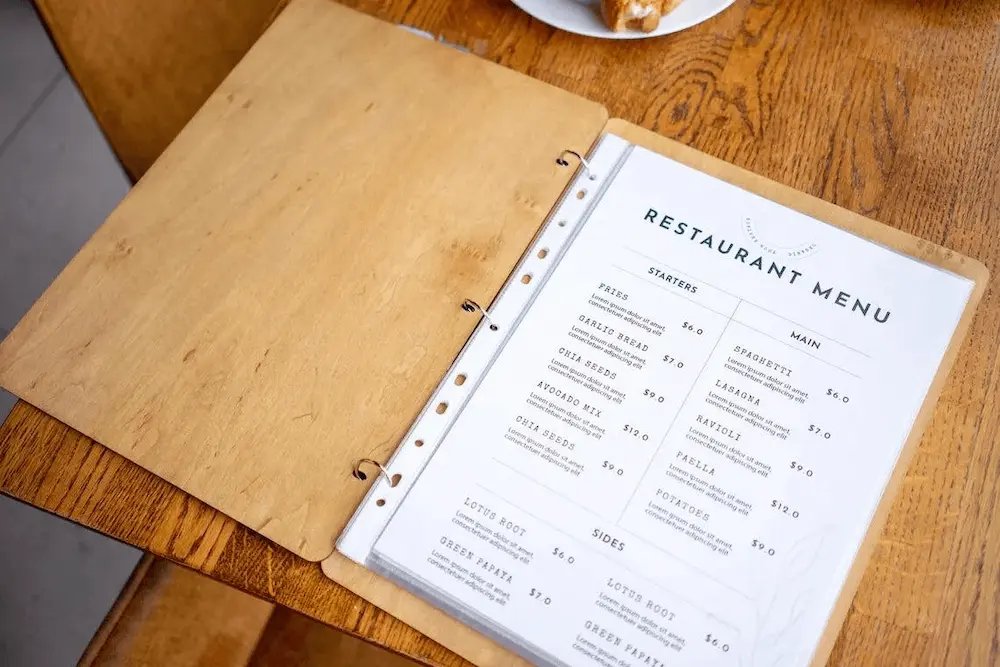
My experience with chicken, pork, and beef options illustrates how this principle works in practice.
Rather than giving every protein a completely separate price, I grouped comparable chicken and pork dishes under one base price.
Beef, which had a significantly higher ingredient cost, carried a $3 additional charge.
This approach simplified the menu while recognizing an important cost difference.
Initially, I wondered whether customers would overwhelmingly choose the more expensive protein.
In practice, that concern did not become a significant problem in my operations.
Customers had different preferences. Some preferred chicken, others chose pork, and many were willing to pay more for beef.
The variety of choices helped balance the overall menu mix.
However, this experience does not mean every restaurant should adopt identical pricing.
Owners must monitor actual sales quantities and the contribution from each option.
If an expensive ingredient becomes disproportionately popular, the pricing structure may need adjustment.
The lesson is to simplify the customer’s decision without losing control of costs.
Research Your Market Before Finalizing Prices
Before setting menu prices, I have regularly studied restaurants serving similar customers.
I visited competitors, reviewed their menus and websites, and read customer reviews to understand perceptions of price and quality.
The goal was never to become the cheapest restaurant or automatically match the most expensive one.
It was to understand what customers in that particular market considered reasonable.
A university food court, residential neighbourhood, and downtown business district may have different expectations even for similar food.
Pricing should reflect the location, target customers, portion sizes, and restaurant concept.
Competitor prices provide useful reference points, but they do not replace your own cost calculations.
Raise Prices Carefully, but Do Not Ignore Rising Costs
Every restaurant eventually faces increasing food prices, wages, and operating expenses.
In my experience, the timing of price increases can influence customer reactions.
Rather than raising prices immediately whenever costs increased, I often observed nearby restaurants and waited until the market had begun adjusting.
By then, customers were generally more familiar with higher prices.
When we eventually updated our menu, many customers understood the change. Some even acknowledged that rising costs were affecting restaurants throughout the area.
That experience reinforced the importance of customer expectations.
However, waiting is not always possible.
If costs rise enough to threaten profitability, a restaurant must respond before losses become difficult to recover.
Price changes should therefore consider both financial necessity and customer acceptance.
After an increase, owners should monitor sales volume, customer feedback, and the amount each menu item contributes toward covering operating expenses.
A successful price increase is not simply one that raises the selling price. It is one that helps maintain a financially sustainable business without unnecessarily damaging customer trust.
A Simple Process for Setting Menu Prices
When developing or reviewing a menu, I recommend following a practical sequence:
- Calculate direct costs. Include ingredients, packaging, and estimated preparation labour.
- Consider remaining expenses. Ensure the selling price contributes sufficiently toward rent, utilities, other labour, and profit.
- Research comparable restaurants. Understand the price range and value expectations of your target customers.
- Simplify menu choices. Use common base prices and clear additional charges where appropriate.
- Monitor actual orders. Review sales volume, customer feedback, and the profitability of each menu option.
- Adjust when necessary. Respond to changes in costs, customer demand, and market conditions.
This process combines financial discipline with an understanding of customer behaviour.

Final Thoughts
Restaurant menu pricing is not simply a mathematical exercise. It is also about understanding how customers make decisions.
Food cost tells us what a dish costs to produce. Customer perception helps determine what people are willing to pay.
Both matter.
My experience with a common chicken-and-pork price and a simple $3 beef option taught me that customers appreciate clear choices.
My experience with price increases taught me that timing and customer expectations can be just as important as the amount of the increase.
And practical cost calculations remind us that a popular menu item must still contribute to the restaurant’s financial health.
The best menu price is not necessarily the lowest price or the price with the smallest food-cost percentage. It is a price customers consider fair and the restaurant can sustain.
Customers may not remember every price on the menu. They remember whether the experience felt worth what they paid.
That feeling builds trust, encourages repeat visits, and supports long-term success.
About the Author
The author has spent nearly 20 years opening and operating independent restaurants in Greater Vancouver, Canada. Rather than sharing theory, this blog series is based on real-world experience—successful openings, costly mistakes, operational improvements, and practical systems that help small restaurants achieve long-term success. The goal of this series is to help future restaurant owners avoid costly mistakes and make better decisions before investing their time, money, and energy.