Restaurant Business Success Series | Blog #6
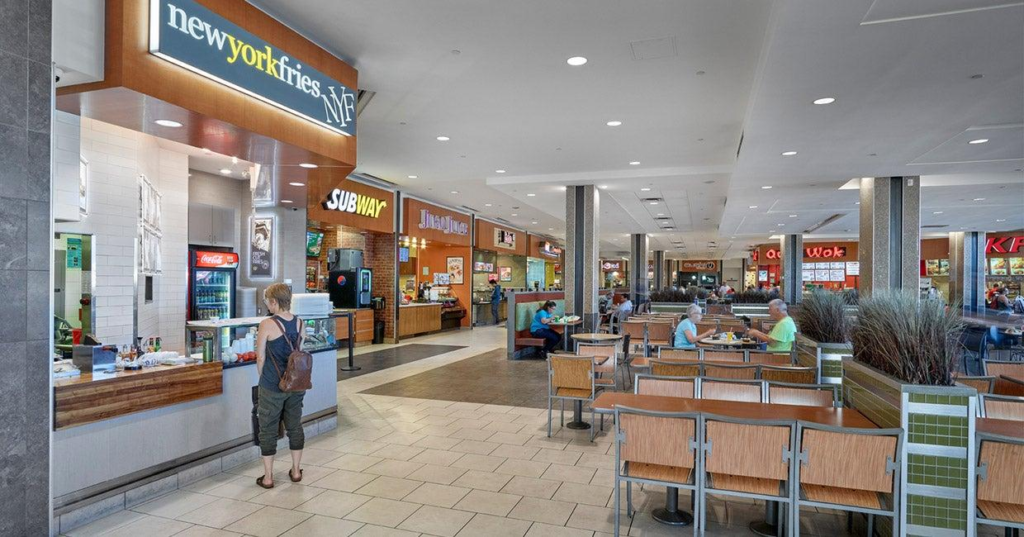
The Best Choice Depends on Your Customers, Location, and Business Model — Not Just the Brand Name
After choosing a location or finding a restaurant business to purchase, many entrepreneurs face another important decision:
Should I create my own independent restaurant, or should I invest in a franchise?
After nearly 20 years of opening and operating restaurants in Greater Vancouver, I have learned that there is no simple answer.
I have watched independent restaurants succeed without famous names, large advertising budgets, or sophisticated corporate systems. I have also seen the advantages that established brands can have, especially in locations where customers make quick purchasing decisions.
But I have learned something more important:
The success of a restaurant depends less on whether it is independent or franchised and more on whether the business model fits its customers and location.
A famous name cannot rescue the wrong concept in the wrong location. At the same time, a good independent restaurant cannot succeed simply because the owner is passionate about the food.
The customer must come first.
Understanding the Real Cost of a Franchise
For a first-time restaurant owner, a franchise can look like the safer choice.
There are real advantages. An established franchise may provide brand recognition, operating procedures, training, marketing support, purchasing systems, recipes, and other systems that an independent owner would otherwise have to develop.
Those benefits can be valuable.
But one mistake I have seen entrepreneurs make is looking at the strength of the brand without looking carefully enough at the economics of the individual restaurant.
A franchise may require an initial franchise fee, ongoing royalties, advertising contributions, approved suppliers, technology fees, renovation requirements, and other expenses.
Those costs continue even when the restaurant has a difficult month.
That is why I would never evaluate a franchise only by asking:
“How popular is this brand?”
I would ask:
“After rent, labor, food costs, royalties, marketing fees, and all other required expenses, can this particular location still produce a healthy profit?”
Those are very different questions.
Over the years, operating restaurants taught me to pay more attention to what remains after sales than to sales alone.
A busy restaurant is not necessarily a profitable restaurant.
And a famous brand does not automatically create a profitable franchise.
Location and Customer Type Often Determine the Better Choice
My restaurant experience has included locations where customers make decisions very differently from customers in a traditional neighborhood restaurant.
This taught me an important lesson.
The same restaurant concept can perform very differently depending on who the customers are and why they are in that location.
In places such as food courts, campuses, shopping centres, business districts, and other high-traffic environments, customers often have limited time to make a decision. Some may be visiting for the first time. Others may simply want something familiar and predictable.
In those situations, brand recognition can be a genuine advantage.
A customer who sees several unfamiliar restaurants and one familiar brand may choose the familiar brand because the decision feels easier and safer.
But brand recognition is only one factor.
Through my own restaurant operations, I learned that you still have to understand what people in that particular location actually want to eat, how much they are willing to spend, how often they may return, and how quickly they expect to be served.
This is why I believe entrepreneurs often ask the wrong question.
The wrong question is:
“Which restaurant brand is popular?”
The better question is:
“What do the customers in this location want?”
That question should come before the brand.
Never Judge a Franchise Only by the Head Office
This is one of the most practical lessons I would give anyone considering a franchise.
Do not evaluate the business only through the franchisor.
Naturally, a franchise company will show prospective buyers its system, successful stores, marketing materials, growth plans, and advantages.
Those things are useful, but they are only one side of the story.
Before investing, I would want to speak directly with several existing franchise owners.
Not just one.
And not only the locations recommended by the head office.
I would want to know:
- Are the owners making a reasonable profit after all franchise-related costs?
- How much support do they actually receive when problems occur?
- Are required purchases and fees reasonable?
- Are they satisfied with the relationship with the franchisor?
- If they could make the decision again, would they buy the same franchise?
- Are existing franchisees opening additional locations, or are stores quietly changing owners or closing?
These conversations can tell you things that a brochure cannot.
My years in the restaurant business have taught me that the people actually operating the restaurants often provide the most useful information about the health of a business model.
A strong franchise should not succeed only at a few showcase locations.
Its system should give ordinary franchise owners a reasonable opportunity to build sustainable businesses.
Avoid Temporary Trends — Choose a Business With Staying Power
Another lesson I have learned is to be careful when a restaurant concept suddenly becomes extremely popular.
Over the years, I have watched food trends appear very quickly.
A new product becomes popular. Customers line up. Social media attention grows. More locations begin opening, and entrepreneurs see the crowds and want to enter the same market.
It can look like an easy opportunity.
But I have also watched some of those concepts lose momentum after the excitement disappeared.
That experience changed the way I evaluate restaurant opportunities.
Before investing, I would ask:
Will customers still want this product several years from now?
Does it fit the everyday eating habits of the local customer base?
Can the restaurant survive when the excitement and long lines disappear?
I prefer a business built around steady customer demand rather than one that depends mainly on temporary popularity.
A trend can create traffic.
But repeat customers create a business.
A temporary trend may bring customers today, but a steady menu builds a business for years.
When an Independent Restaurant Can Be the Better Choice
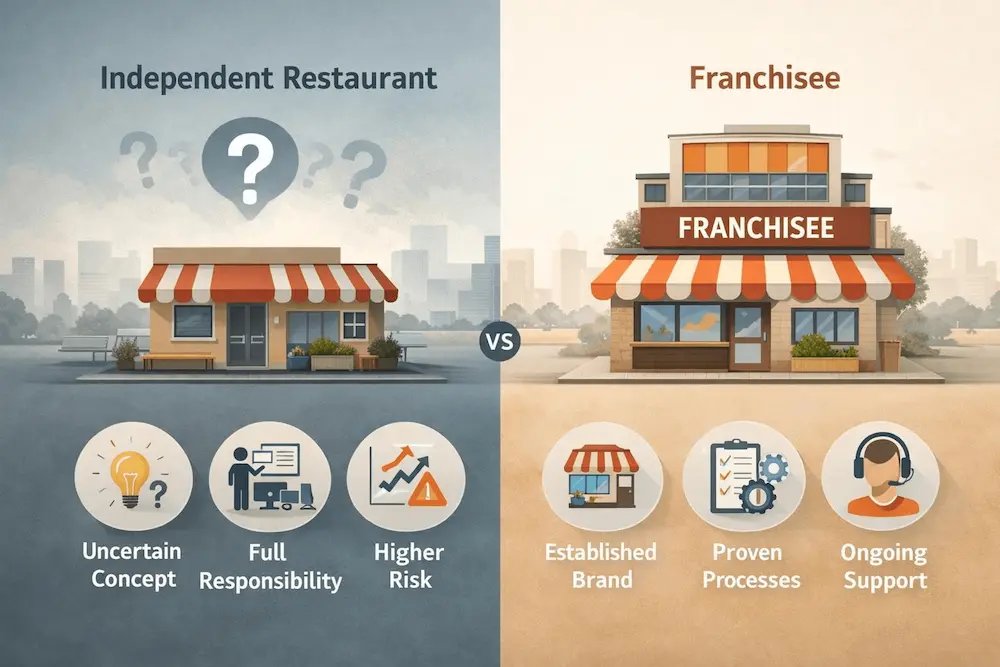
Franchises have advantages, but independent restaurants can have advantages too.
I have seen this repeatedly during my years in the restaurant business.
An independent restaurant may not have national advertising, a famous logo, or a large corporate organization behind it. But a good independent operator can respond more directly to the local customer.
The owner can adjust the menu, pricing, portion size, service style, and operating system based on what customers actually want.
That flexibility can be extremely valuable.
In local communities and locations with many repeat customers, people may care far more about food quality, consistency, value, service, and personal connection than about a famous brand name.
I have seen independent restaurants quietly build loyal customer bases because the owners understood their customers very well.
They did not win because they spent more on marketing.
They won because customers had a reason to return.
That is one of the strongest lessons from my own experience:
Restaurants that truly understand their customers can build sustainable success without depending on brand recognition alone.
For an independent restaurant, however, freedom also means responsibility.
There is no head office to design your menu, create your systems, train your employees, or correct your mistakes.
You have to build those systems yourself.
That can be difficult, but for an experienced operator who understands the customers and the location, it can also be one of the greatest advantages of owning an independent restaurant.
Freedom Is Valuable — But Only If You Know How to Use It
One of the biggest differences between an independent restaurant and a franchise is freedom.
An independent owner can change the menu, pricing, suppliers, promotions, portions, operating procedures, and even the overall concept without waiting for approval from a head office.
That freedom can be a major advantage.
But during my years in the restaurant business, I learned that freedom itself does not create success.
Every decision still has to make business sense.
I have made decisions that worked well because I understood the customers and the location. I have also made decisions that taught me expensive lessons when I relied too much on my own confidence.
Those experiences taught me that an independent restaurant owner needs discipline as much as creativity.
The question should never be:
“What do I want to sell?”
It should be:
“What do my customers want to buy, and can I deliver it consistently and profitably?”
That distinction is important.
A franchise gives up some freedom in exchange for an established system.
An independent restaurant keeps the freedom but must create the system itself.
Neither choice is automatically better.
Who May Be Better Suited to a Franchise?
A franchise may make sense for someone who wants a more structured way to enter the restaurant business.
For a first-time owner, developing everything from the beginning can be overwhelming.
A good franchise may already have systems for:
- Menu development
- Recipes and portion control
- Employee training
- Purchasing
- Marketing
- Store design
- Daily operating procedures
These systems can reduce some of the trial and error that independent restaurant owners face.
But I would still be careful with the word “safe.”
A franchise is not safe simply because the brand is familiar.
The location can still be wrong. Rent can still be too high. Labor costs can still hurt profitability. The local customer may still prefer something different.
Most importantly, the numbers still have to work after all franchise-related costs are paid.
For someone considering a franchise, I would therefore look for a proven system with healthy franchise owners, not simply a famous name.
Who May Be Better Suited to an Independent Restaurant?
An independent restaurant may be a better choice for an owner who already understands restaurant operations and has a clear understanding of the target customer.
Experience matters because independence requires you to make hundreds of decisions that a franchise system may already have made for you.
You need to decide what to sell, how much to charge, which suppliers to use, how to organize the kitchen, how to train employees, and how to maintain consistent quality.
After years of operating restaurants, I came to appreciate this flexibility.
If customer demand changed, I could study it and respond.
If a menu item was not working, I could reconsider it.
If an operating procedure created unnecessary labor or slowed service, I could improve it.
But this flexibility only works when decisions are based on customer behavior and operating results rather than personal preference.
That is why I would not recommend independence simply because someone wants “more freedom.”
Freedom is useful when it is supported by experience, discipline, and customer understanding.
Final Thoughts
Many entrepreneurs ask:
“Should I choose a franchise or create my own restaurant brand?”
My answer is:
Do not start with the brand.
Start with the customer.
Before choosing either model, understand:
- Who your customers are
- What they want
- What they are willing to pay
- Why they would choose your restaurant
- How often they are likely to return
- Whether your location supports the concept
- Whether the numbers can produce a sustainable profit
If you choose a franchise, study the franchise owners—not just the franchisor.
If you choose an independent restaurant, focus on building loyal customers rather than chasing temporary trends.
Nearly 20 years in the restaurant business have taught me that there are many ways to operate a restaurant successfully.
I have seen good concepts struggle in the wrong situation, and ordinary concepts perform surprisingly well when they matched the customers and location.
That is why I no longer begin by asking which business model looks more impressive.
I begin with the customer.
At the end of the day, restaurants do not survive because they have the most attractive logo, the biggest advertising budget, or the most fashionable concept.
They survive because enough customers believe the restaurant gives them a reason to return.
The brand may attract customers once, but only customer satisfaction brings them back.
About the Author
The author has spent nearly 20 years opening and operating independent restaurants in Greater Vancouver, Canada. Rather than sharing theory, this blog series is based on real-world experience—successful openings, costly mistakes, operational improvements, and practical systems that help small restaurants achieve long-term success.
Continue Reading
Blog #2: How to Choose the Right Restaurant Location in Vancouver: Lessons from My Overconfidence
Blog #4: Buying an Existing Restaurant vs. Starting from Scratch in Canada: Which Option Is Better?