Restaurant Business Success Series | Blog #15
Introduction
After nearly 20 years of operating restaurants in Greater Vancouver, I have learned that customers remember one thing above all else:
How your food tastes.
Great food is one of the most powerful forms of marketing. When customers consistently enjoy the same quality and flavor, they return, recommend your restaurant to others, and eventually become loyal customers.
That consistency does not happen by accident.
It comes from one essential system that every successful restaurant should have:
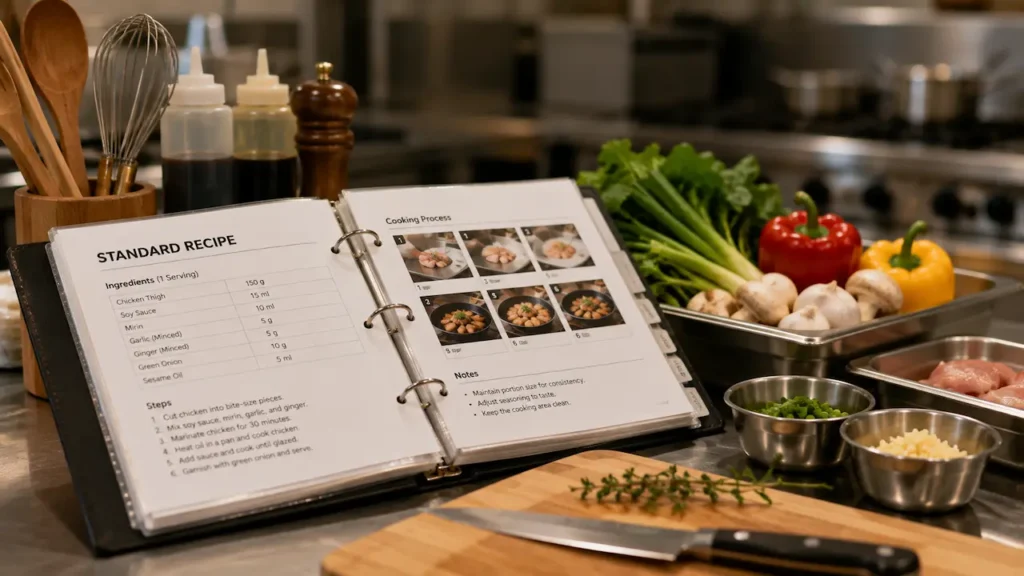
A standard recipe.
Many restaurant owners believe standard recipes are only necessary when opening a second or third location. In reality, even a single restaurant depends on them to protect food quality, control food costs, maintain inventory accuracy, and preserve customer trust.
A restaurant’s reputation is built one plate at a time. If customers cannot rely on receiving the same taste every visit, they eventually lose confidence in the restaurant.
Why Every Restaurant Needs Standard Recipes
Every chef eventually leaves.
Some move to another restaurant, while others retire or choose a different career.
Whenever a chef changes, your menu is at risk.
If the same dish tastes different simply because a different chef prepared it, customers notice immediately.
Unfortunately, very few customers tell you what went wrong.
Most simply stop coming.
In my experience, many customers will give a restaurant one more chance. They assume the first disappointing meal was just an unusual day.
However, if their second visit is disappointing as well, they quietly become someone else’s customer.
Restaurant owners often wonder why familiar faces suddenly disappear.
The problem may not be your prices.
It may not be your service.
It may simply be that your signature dishes no longer taste the way your customers remember them.
When regular customers stop returning, treat it as an early warning sign.
Immediately review your recipes, portion sizes, and cooking procedures. Determine whether the inconsistency began after a chef changed or whether different chefs are preparing the same menu differently.
Consistency should never depend on who happens to be working that day.
It should depend on your standard recipe.
A Lesson I Learned as a Customer
There is a small restaurant that I enjoy visiting.
Whenever the owner-chef prepares the food, every dish tastes exactly as I expect.
One day, however, my favorite menu tasted noticeably different.
The presentation looked similar, but the flavor and overall quality had clearly declined.
I immediately asked whether the owner-chef was working that day.
The answer was no.
It was the owner’s regular day off.
Another chef had prepared the meal.
That experience stayed with me because I realized something important.
If I could notice the difference after one meal, my own customers could certainly notice differences in my restaurant as well.
Customers usually recognize inconsistency much sooner than restaurant owners do.
Standard Recipes Protect Your Brand
Customers recognize your restaurant by the taste they remember.
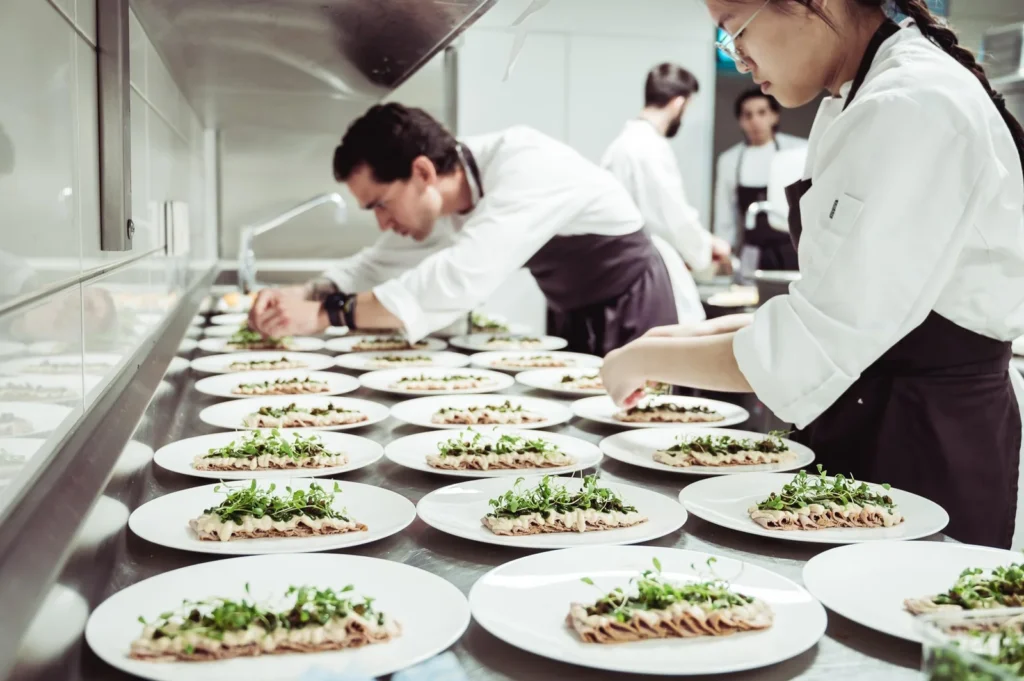
Every chef should therefore prepare the same menu with the same flavor, presentation, and quality every time.
In our restaurant, every chef is required to taste each menu item before serving the first customer order of the day. This simple routine confirms that the standard recipe has been followed before the food reaches the table.
Occasionally, an important seasoning or ingredient becomes temporarily unavailable. Even then, we carefully adjust the recipe to produce a flavor as close as possible to our standard recipe. Customers should never notice the difference.
Consistency is not something you hope for.
It is something you manage every day.
What McDonald’s and Starbucks Teach Us
There is a reason people confidently visit McDonald’s or Starbucks almost anywhere in the world.
Whether they are in Canada, Japan, Europe, or the United States, customers expect nearly the same taste and quality every time they visit.
That confidence comes from standardized recipes and disciplined operating systems.
Customers know what they will receive before they even place their order.
That trust has become one of the world’s greatest competitive advantages.
Independent restaurants should learn the same lesson.
You may have only one location, but your customers should enjoy the same confidence every time they dine with you. They should never wonder who is cooking today or whether their favorite menu item will taste different.
Consistency eventually becomes part of your restaurant’s brand.
The Owner Must Verify the Standard
One habit has helped me maintain consistency for many years.
Two or three times each month, I order food exactly as a customer would.
Nothing is prepared differently because I am the owner.
I simply eat the same menu my customers receive.
Only then can I honestly confirm whether our standard recipes are still being followed and whether the food meets the quality our customers expect.
Owners should never assume everything is fine simply because no one has complained.
The most reliable way to protect your restaurant’s reputation is to regularly experience your restaurant exactly as your customers do.
Standard Recipe Checklist
Before assuming your menu is truly consistent, ask yourself these questions:
- Does every chef follow exactly the same standard recipe?
- Are portion sizes measured consistently every time?
- Does every dish look the same before it reaches the customer?
- Does your kitchen verify the taste before the first order is served each day?
- Do you personally eat the same food your customers receive on a regular basis?
- Can customers enjoy the same taste and quality regardless of which chef is cooking?
If you cannot confidently answer “Yes” to every question, your restaurant may already be losing customers without realizing it.
Final Thoughts
A standard recipe is much more than a cooking guide.
- It creates consistency.
- Consistency improves inventory management.
- Better inventory management helps control food costs.
- Lower food costs improve profitability.
- Most importantly, consistency builds customer satisfaction.
- Satisfied customers become loyal customers.
- Loyal customers are the foundation of every successful restaurant.
After nearly 20 years in the restaurant business, I have learned that customers do not become loyal because your food is excellent once.
They become loyal because it is excellent every single time.
And that consistency always begins with a standard recipe.
About the Author
The author has spent nearly 20 years opening and operating independent restaurants in Greater Vancouver, Canada. Rather than sharing theory, this blog series is based on real-world experience—successful openings, costly mistakes, operational improvements, and practical systems that help small restaurants achieve long-term success.