Restaurant Business Success Series | Blog #22
Lessons from Nearly 20 Years of Opening and Operating Restaurants in Greater Vancouver
Smart Ways to Grow Revenue(increase restaurant sales) While Protecting Your Profit Margin
Introduction
— More Sales Are Good Only When They Create More Profit
Every restaurant owner wants to increase sales.
The easiest idea may seem to be attracting more customers through discounts and promotions. But as I discussed in the previous article, higher sales do not always mean higher profits.
A restaurant can look extremely busy while making very little money after all expenses are paid.
That is why the goal should not simply be more sales.
The goal is more profitable sales.
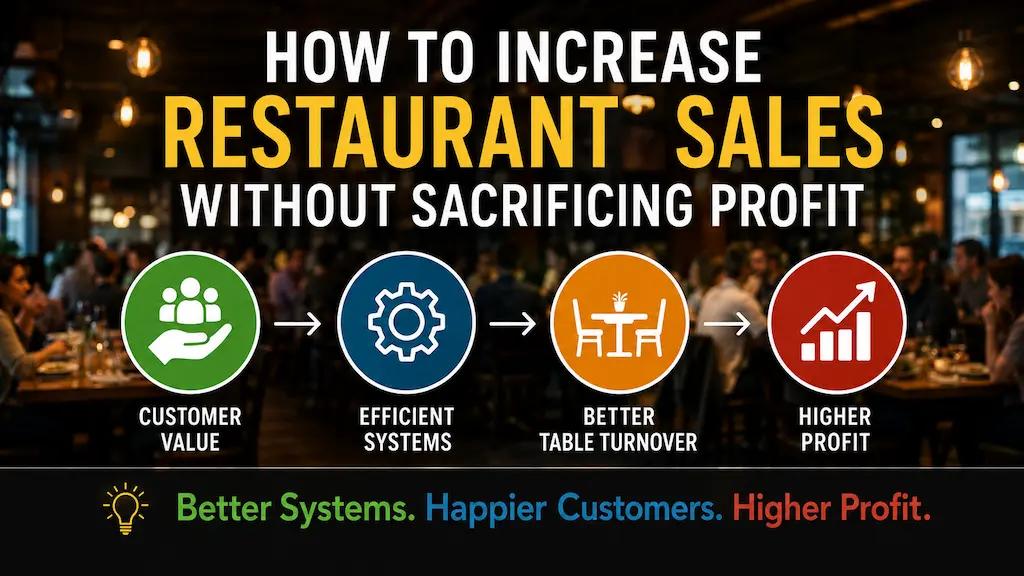
Over the years, I have learned that some of the best opportunities to increase sales are already inside the restaurant—in customer value, employee workflow, table turnover, and operational efficiency.
Increase Customer Value Before Cutting Prices
Discounting is one way to attract customers, but it is not the only way to increase sales.
Throughout most of my restaurant experience, I generally followed a no-discount policy. Instead, we focused on food quality, consistency, and customer service.
Customers return when they believe the experience is worth the price they pay.
Customer Value → Customer Satisfaction → Repeat Visits → Sales → Profit
A lower price may bring a customer through the door once.
Strong value gives that customer a reason to return.
More Customers Are Useless If Your System Cannot Handle Them
Imagine running a successful promotion and suddenly having many more customers arrive.
What happens if the kitchen cannot handle the orders, servers become overwhelmed, tables are not cleared quickly, and customers wait too long?
The restaurant becomes busier, but the customer experience becomes worse.
Before bringing more customers into your restaurant, make sure your restaurant is ready to serve them well.
More customers do not help the business if the experience gives them a reason not to return.
Table Turnover: One of the Most Overlooked Ways to Increase Restaurant Sales
One of the biggest opportunities for increasing restaurant sales is often already inside the dining room.
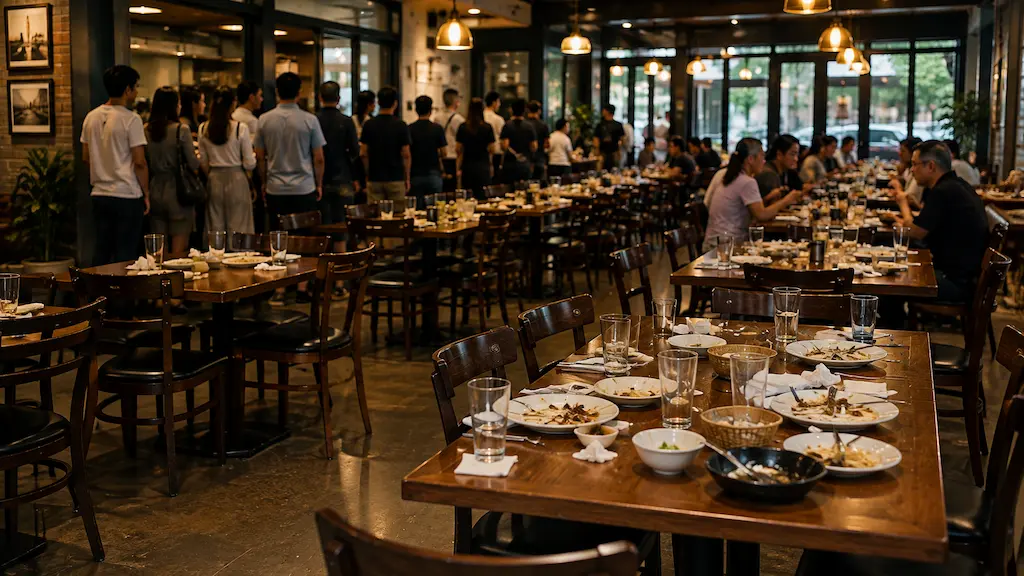
I have visited restaurants where customers were standing at the entrance waiting while several tables inside were empty.
The previous customers had already left, but dishes were still sitting on the tables. No one had cleared and reset them, so new customers could not be seated.
Customers are waiting.
Employees are busy.
Tables are empty.
And the restaurant is losing sales.
The problem is not a lack of demand.
The problem is the system.
Every unnecessary minute that a usable table remains unavailable during a busy period can limit restaurant sales.
Two Table Turns vs. Three Can Make a Big Difference
Suppose a restaurant has 20 tables during its busiest dinner period.
With two table turns:
20 tables × 2 turns = 40 table parties
With three:
20 tables × 3 turns = 60 table parties
That is the potential to serve 50% more table parties using the same dining room.
But there is one critical condition:
Never increase table turnover by making customers feel rushed.
The goal is not to push customers out faster. It is to eliminate unnecessary delays while maintaining customer satisfaction.
Efficient table turnover and excellent hospitality should work together.
Find the Bottleneck
When table turnover is slow, first identify why.
- Are tables taking too long to be cleared?
- Is responsibility for resetting them unclear?
- Is the kitchen unable to keep up?
- Is payment taking too long?
- Is communication between hosts, servers, bussers, and kitchen staff inefficient?
The owner needs to observe the restaurant carefully during peak hours and repeatedly ask:
Where is the bottleneck?
Sometimes one small change in workflow can make a significant difference.
Better Systems Can Increase Sales Without Discounts
Restaurant productivity depends not only on how hard employees work, but also on how intelligently the work is organized.
Clear responsibilities, preparation before the rush, good communication, efficient scheduling, and proper task assignments can allow customers to be seated faster and orders to move more smoothly.
The result can be:
Better System → Faster Service → Better Table Turnover → More Sales
But efficiency should never come at the expense of hospitality.
A customer should feel well served—not processed through the restaurant as quickly as possible.
Increase the Average Sale Without Pressuring Customers
Another way to increase sales is to increase the average amount each customer spends.
But this should not mean pressuring customers to order more expensive items.
A beverage that complements the meal, an appropriate side dish, or a useful add-on can improve the dining experience while increasing the average sale.
Help customers build a better meal, not simply a bigger bill.
When additional sales also create additional customer value, both sides benefit.
Protect Quality as Sales Increase
As sales grow, the restaurant must be able to maintain the same quality.
Higher order volume can create inconsistent portions, rushed food preparation, and slower service.
If the customer experience gets worse as the restaurant becomes busier, short-term growth can damage long-term sales.
This is why standard recipes, employee training, kitchen systems, productivity, and quality control become even more important as sales increase.
Growth without consistency can destroy the very reason customers came in the first place.
Measure Profit, Not Just Sales Growth
Finally, owners should ask whether higher sales are actually improving the business.
If table turnover improves and sales increase, what happened to labor costs, overtime, food waste, customer complaints, and profit?
Think of sales growth this way:
Sales ↑ → Costs → Customer Satisfaction → Profit
All four matter.
Do not ask only:
“Did we increase sales?”
Ask:
“Did we increase profit while protecting customer value?”
Final Thoughts
— Grow Sales, But Grow the Right Sales
Restaurant sales do not increase only by attracting more customers through discounts.
Sometimes the biggest sales opportunity is already inside the restaurant.
It may be an empty table waiting too long to be cleared, poor communication between employees, or an inefficient workflow during the busiest hour.
Owners and employees should work together to find smarter ways to use the restaurant’s existing capacity.
Increasing table turnover can significantly increase sales, but customers should never feel rushed or less valued.
The best restaurant system achieves both:
Greater efficiency and greater customer satisfaction.
The goal is not simply to fill more tables or make employees busier. It is to serve more customers well, protect profitability, and give them a reason to return.
Sometimes the biggest opportunity to increase restaurant sales is already inside the restaurant.
The best sales growth is not the growth that makes your restaurant busier. It is the growth that makes your restaurant stronger.
About the Author
The author has spent nearly 20 years opening and operating independent restaurants in Greater Vancouver, Canada. Rather than sharing theory, this blog series is based on real-world experience—successful openings, costly mistakes, operational improvements, and practical systems that help small restaurants achieve long-term success.
Beyond Canada
Although the examples in this article come from my experience in Greater Vancouver, the basic lesson applies far beyond Canada. Regulations, construction processes, and approval systems differ by market, but delays cost money everywhere. Restaurant owners should budget not only for what they expect to spend, but also for the time it may take before revenue begins.
Continue Reading
- Blog #21: Increasing Kitchen Productivity Without Sacrificing Food Quality
- Blog #17: Increasing Kitchen Productivity Without Sacrificing Food Quality
- Blog #18: Restaurant Staff Training Systems: How to Build a Team That Delivers Consistent Quality
- Blog #15: Restaurant Staff Training Systems: How to Build a Team That Delivers Consistent Quality