Restaurant Business Success Series | Blog #18
Why Standard Recipes, Regular Practice, and Team Training Are Essential for Restaurant Consistency
Introduction
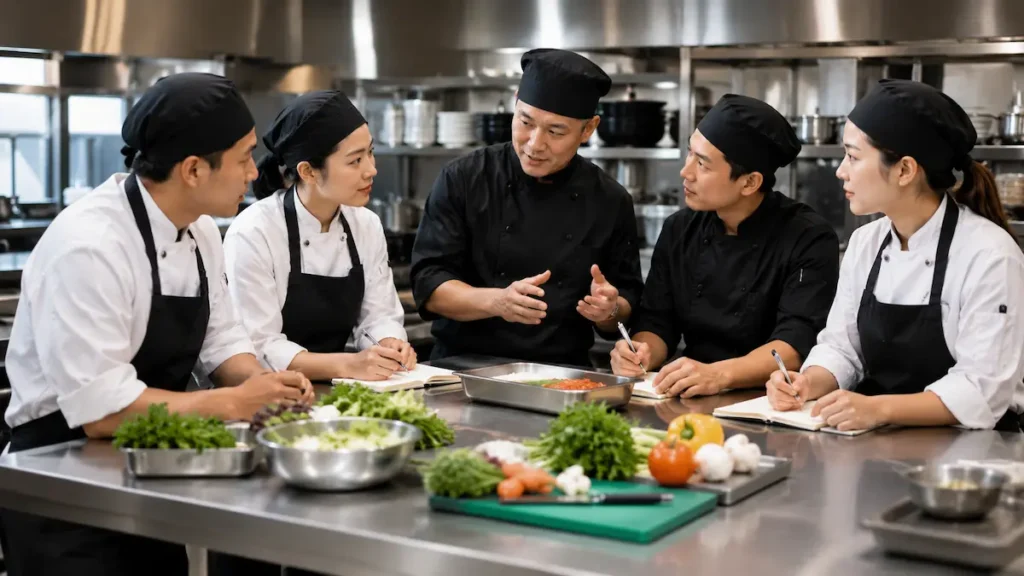
Hiring good employees is important, but hiring alone does not create a strong restaurant team.
Even employees with good character and years of experience bring their own cooking styles, habits, and ways of working. Without proper training, those differences can gradually create inconsistency.
The purpose of restaurant training is not to make every employee exactly the same.
It is to make sure every customer receives the same quality, regardless of who is working that day.
That requires a clear training system.
Standard Recipes Must Come First
One of the most important parts of staff training is making sure employees fully understand and follow the restaurant’s standard recipes.
Every cook has personal habits. Without realizing it, an employee may gradually change seasoning, cooking time, portion size, preparation methods, or plating according to personal preference.
Eventually, the restaurant’s standard recipe can slowly become the employee’s own recipe.
Experienced employees can sometimes be especially vulnerable to this. They may have developed successful techniques at previous restaurants and naturally return to familiar methods.
Their experience should be respected, and good ideas should be welcomed. But changes should be discussed and adopted as a restaurant standard—not introduced individually.
Experienced does not always mean standardized.
That is why standard recipes and expectations should be clearly established from the beginning.
Even Professionals Practice Before They Perform
Professional singers rehearse before a major performance.
Professional soccer players train together before a match, even though every player already knows how to play at a high level.
They practice because individual skill and team consistency are different things.
Restaurant employees are no different.
Training is not only for inexperienced employees. Skilled employees also need practice to understand how their abilities fit into the restaurant’s system.
Even professionals need practice to perform consistently as a team.
Show → Practice → Check → Repeat
Simply explaining a procedure once is rarely enough.
I believe effective restaurant training should follow a simple cycle:
Show → Practice → Check → Repeat
Demonstrate the correct procedure, let the employee perform it, check the result, provide feedback, and repeat until the standard becomes a habit.
The goal is not simply to remember instructions.
The goal is to turn restaurant standards into everyday habits.
Train for Quality Before Speed
Speed matters in a busy restaurant, but it should never come before accuracy and consistency.
A fast cook who regularly produces inconsistent food can create more problems than a slightly slower employee who follows the standard correctly.
Employees should first learn to do the job correctly. Speed and productivity can then improve through repetition, organization, and teamwork.
True productivity means producing consistent quality efficiently.
The Owner Should Regularly Taste the Food
Training should not end after an employee’s first few days.
Standards can gradually change over time without anyone noticing.
One of the simplest methods I have used is to periodically eat my own restaurant’s food exactly as it is served to customers.
An owner might do this once a month or on another regular schedule.
Do not ask the kitchen to prepare something special because the owner is eating it. Taste the same food, portion, temperature, presentation, and overall product that an ordinary customer receives.
This simple habit can reveal small changes before they become larger problems.
Sometimes the best way to understand what customers are receiving is simply to become a customer in your own restaurant.
Let Employees Taste Each Other’s Food
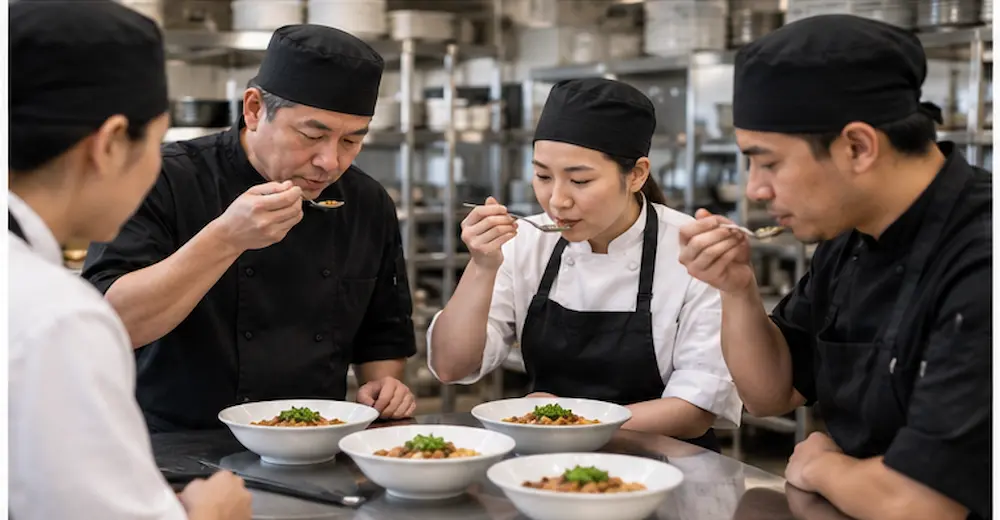
Another effective method is periodic team tasting.
Have team members prepare the same menu item and taste each other’s food.
The purpose is not to decide who is the better cook. The question should be:
“Are we still following the same standard?”
If differences appear, compare the results with the standard recipe and discuss what caused them.
Then correct the differences together.
This process does more than improve food consistency. Employees learn from one another, communicate more openly, and strengthen teamwork.
Quality control becomes part of team development rather than simply management inspection.
Train the “Why,” Not Just the “How”
Employees are more likely to follow standards when they understand why those standards matter.
A standard recipe protects the taste customers remember.
A standard portion ensures customers receive consistent value.
A cleaning checklist protects food safety and the restaurant’s reputation.
When employees understand the reason behind a standard, they are more likely to take ownership of it.
Training therefore should not be a one-time event. Owners and managers need to periodically observe, taste, discuss, and correct small differences before they become permanent habits.
Restaurant Staff Training Checklist
- Teach standard recipes from the beginning
- Demonstrate before expecting independent performance
- Use the Show → Practice → Check → Repeat method
- Train for accuracy and consistency before speed
- Watch for employees returning to personal cooking habits
- Welcome good ideas, but standardize changes before implementing them
- Periodically taste food exactly as customers receive it
- Conduct team tastings to compare consistency
- Discuss differences without blaming individuals
- Explain why each standard matters
- Provide refresher training when standards begin to drift
Final Thoughts
A restaurant does not achieve consistency simply by hiring talented people.
Every employee brings different experience, skills, habits, and ideas. A good training system brings those individual strengths together under one clear restaurant standard.
Teach the standard. Let employees practice it. Check it regularly. Let the team taste, compare, discuss, and correct together.
Over time, this creates more than consistent food.
It creates a stronger team.
The goal of training is not to make every employee work the same way. It is to make sure every customer receives the same quality.
About the Author
The author has spent nearly 20 years opening and operating independent restaurants in Greater Vancouver, Canada. Rather than sharing theory, this blog series is based on real-world experience—successful openings, costly mistakes, operational improvements, and practical systems that help small restaurants achieve long-term success.