Restaurant Business Success Series | Blog #20
Why Restaurant Profit Is Won or Lost in Everyday Operations
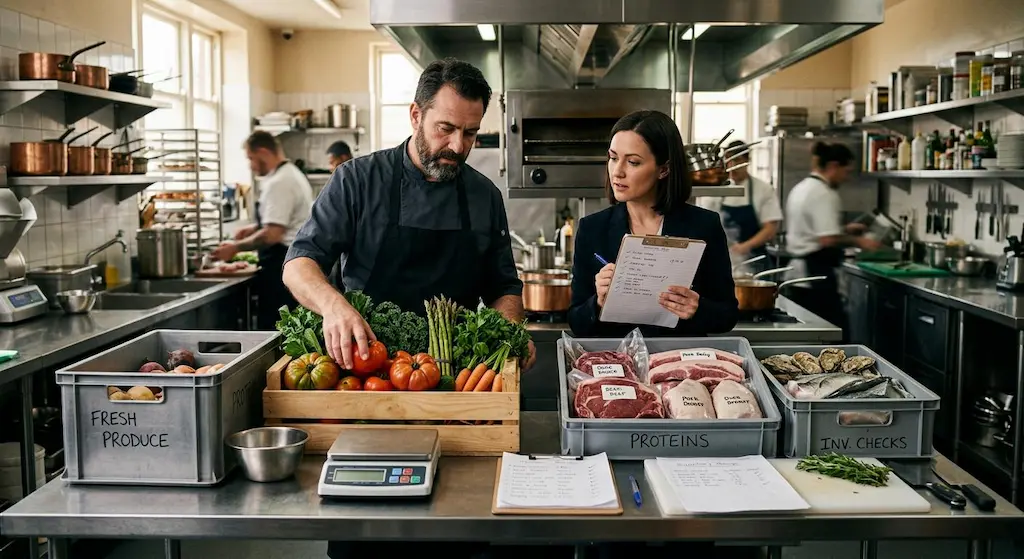
Introduction — Small Costs Are Not Small
After many years of operating restaurants, I learned that profit is often won or lost through small decisions made every day.
A little extra sauce, too much prep, unnecessary food waste, or an extra hour of overtime may not seem important. But when these small costs are repeated every day, they can become significant monthly expenses.
Small costs become big costs when they repeat every day
Good cost control, however, does not mean simply spending less or giving customers less. The real goal is to eliminate unnecessary costs while protecting the quality, consistency, and value customers expect.
Quality Control and Cost Control Are Connected
In Blog #19, I discussed accurate measuring and introduced a simple principle:
“Measure the Measuring.”
Measuring protects not only consistent food quality but also food cost.
Imagine that one serving of sauce contains just $0.15 more than the standard recipe requires.
If a restaurant sells 150 servings per day:
$0.15 × 150 = $22.50 per day
Over 30 days:
$22.50 × 30 = $675 per month
Over one year:
$675 × 12 = $8,100
A difference that seems meaningless on one plate can become thousands of dollars over time.
This is where quality control and cost control meet.
Accurate measuring gives customers consistent food while protecting the restaurant’s profitability.
Portion Control Is Not About Giving Customers Less
This is one of the most important lessons I learned about restaurant cost control.
Some restaurant owners may believe that slightly reducing portions is an easy way to lower food costs. On paper, it may appear to improve profitability.
But reducing portions below the established standard can be more damaging than giving customers slightly more.
Customers may not know the exact weight of the meat or amount of sauce they received before. But they often notice when something feels different.
The plate looks smaller. There is less meat. The sauce seems insufficient. The meal no longer feels like the same value.
The dangerous part is that customers may never complain. They may simply visit less often—or stop coming altogether.
A restaurant might save a few cents on one meal but eventually lose a customer worth hundreds of dollars in future sales.
That is not good cost control.
If a portioning mistake occasionally happens, giving slightly more is generally less damaging than giving less. Generosity can increase perceived value and may lead to repeat visits, word of mouth, and positive customer reviews.
But regularly giving more than the standard is not the answer either.
The best solution is consistency.
The goal should never be:
“How little can we give the customer?”
The better question is:
“How can we give every customer the correct portion, every time?”
Correct portions protect food cost. Consistent portions protect customer trust. Together, they protect long-term profitability.
Control Prep Before Controlling Purchasing
Restaurant owners naturally look for lower ingredient prices.
Buying wisely matters, but before asking, “Can I buy this ingredient cheaper?” another question should come first:
“Are we preparing the right amount?”
Over-preparation creates hidden costs.
If the kitchen prepares more vegetables, meat, sauces, or side dishes than actual customer demand requires, some of that food may lose quality or eventually be discarded.
Saving a few cents when purchasing an ingredient means very little if too much of it is being prepared and thrown away.
Good cost control begins with understanding sales patterns and adjusting preparation accordingly.
Prepare enough to serve customers efficiently, but not so much that unnecessary waste becomes part of the daily routine.
Waste Is Money Leaving the Restaurant
Food waste does not only mean spoiled ingredients.
Waste can come from:
- Over-preparation
- Incorrect portions
- Cooking mistakes
- Remakes
- Poor storage
- Spoilage
- Excess inventory
- Ingredients prepared but never sold
One mistake may cost only a few dollars. But restaurant operations repeat hundreds or thousands of times each month.
That is why managers should not only ask:
“How much food did we purchase?”
They should also ask:
“Where did the food actually go?”
Food that was purchased but never sold is money that left the restaurant without producing revenue.
Reducing this type of waste is true cost control because the customer loses nothing.
Labor Cost Is Also a Daily Decision
Cost control is not limited to food.
Labor is another area where small daily decisions can become significant monthly expenses.
Scheduling too many employees during slow periods, keeping employees longer than necessary, poorly organizing shifts, or allowing unnecessary overtime gradually increases labor costs.
But cutting labor too aggressively creates another problem.
Too few employees can mean slower service, exhausted staff, more mistakes, and dissatisfied customers.
As discussed in Blog #17 about kitchen productivity, the goal is not simply to use fewer employees.
The goal is to build the right team for the right shift based on actual business volume.
Good labor control is not about cutting people.
It is about using people effectively.
Small Expenses Become Big Expenses
One of the most dangerous thoughts in restaurant operations is:
“It’s only a little.”
A little extra ingredient.
A little food waste.
A little overtime.
One complimentary item.
One remake.
Individually, these expenses may truly be small.
The problem is repetition.
When a small unnecessary expense is repeated across employees, menu items, and hundreds of transactions, it can become a significant monthly cost.
Restaurant managers therefore need to look beyond the cost of one mistake and understand the cost of repetition.
That is why:
Small costs become big costs when they repeat every day.
Don’t Cut Costs That Customers Can Feel
This may be the most important principle in restaurant cost control.
Never save money in a way that makes customers feel they are receiving less value.
Replacing a good ingredient with a noticeably inferior one may reduce food cost.
Reducing portions below the standard may reduce food cost.
Cutting employees until service quality suffers may reduce labor cost.
But if customers notice the difference, those savings can eventually become very expensive.
Customers do not see your food-cost percentage.
They experience the meal.
They see the portion. They taste the ingredients. They experience the service.
And based on those experiences, they decide whether to return.
This connects with the principle discussed in Blog #13: better food can be more profitable than simply using cheaper ingredients.
True cost control should remove expenses customers do not need to feel—waste, mistakes, over-preparation, unnecessary overtime, poor scheduling, and inconsistent portions.
It should never remove the quality and value that give customers a reason to return.
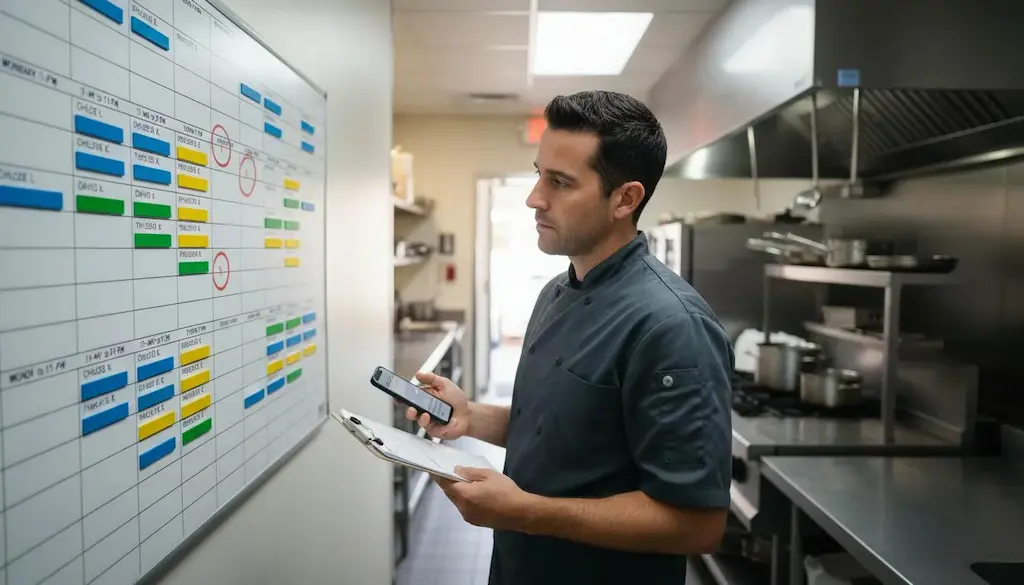
Build a Simple Daily Cost-Control Routine
Restaurant cost control does not need to begin with complicated financial systems.
A simple daily routine can prevent small problems from becoming large ones.
At the end of each day, managers can ask:
- Were standard portions followed?
- Was prep quantity appropriate for actual sales?
- Was any food unnecessarily wasted?
- Were there unusual mistakes or remakes?
- Was inventory used properly?
- Was staffing appropriate for the level of business?
- Was there unnecessary overtime?
The purpose is not to criticize employees for every small mistake.
The purpose is to identify repeated patterns.
One mistake may be insignificant. A mistake repeated every day becomes a system problem—and eventually a financial problem.
Final Thoughts
— Protect Profit Without Reducing Customer Value
Restaurant profitability is protected through hundreds of small decisions made correctly every day.
Measure accurately. Maintain standard portions. Prepare according to demand. Reduce unnecessary waste. Schedule employees according to business volume.
Most importantly, never confuse cost control with giving customers less.
Giving less may save a few cents today but cost you a customer tomorrow. Giving too much may please customers, but uncontrolled over-portioning eventually damages food cost.
The best answer is neither less nor more. The best answer is the correct portion, delivered consistently.
You do not protect restaurant profit once a month when you read the financial statement.
You protect it every day through the decisions your team makes.
About the Author
The author has spent nearly 20 years opening and operating independent restaurants in Greater Vancouver, Canada. Rather than sharing theory, this blog series is based on real-world experience—successful openings, costly mistakes, operational improvements, and practical systems that help small restaurants achieve long-term success.